Qiaoning (Carol) Zhang张巧宁

Assistant Professor · Human Systems Engineering · Arizona State University
Director, CARE Lab (Collaborative Automation and Robotic Experiences)

I am an Assistant Professor of Human Systems Engineering in the Polytechnic School, Ira A. Fulton Schools of Engineering at Arizona State University. I received my Ph.D. in Information from the University of Michigan under the guidance of my incredible advisors, Dr. Lionel P. Robert Jr. and Dr. X. Jessie Yang.

I believe the best technology doesn't just work, it understands us. That belief drives everything I do. My research focuses on how social contexts influence our interactions with cutting-edge technologies such as AI, healthcare robots, and automated vehicles, and I aim to create a future where technology is not just smart but also empathetic.

As intelligent systems become woven into our daily lives, people deserve technology that respects who they are, responds to how they feel, and earns their trust over time. That is why empathetic design sits at the core of my research: it is the bridge between capable machines and meaningful human experiences. This vision has led me to design socially assistive robots that care for older adults aging at home through compassionate interaction, to study how a vehicle's voice and explanations build and sustain driver trust, and to explore how humans and AI can form complementary teams grounded in mutual understanding. My work has been published at top venues including CHI, HRI, HFES, and in journals such as International Journal of Human–Computer Interaction, Journal of Patient Safety, Scientific Reports, and Transportation Research Part C, and featured by the World Economic Forum, NPR, and CNET.

Human-AI Collaboration Human-Robot Interaction Human Factors in Automated Vehicles User Experience (UX) Design

I am actively seeking Ph.D. students and undergraduate/master researchers to join my team. If you share a passion for building technology that truly serves and connects with people, I'd love to hear from you. Learn more.

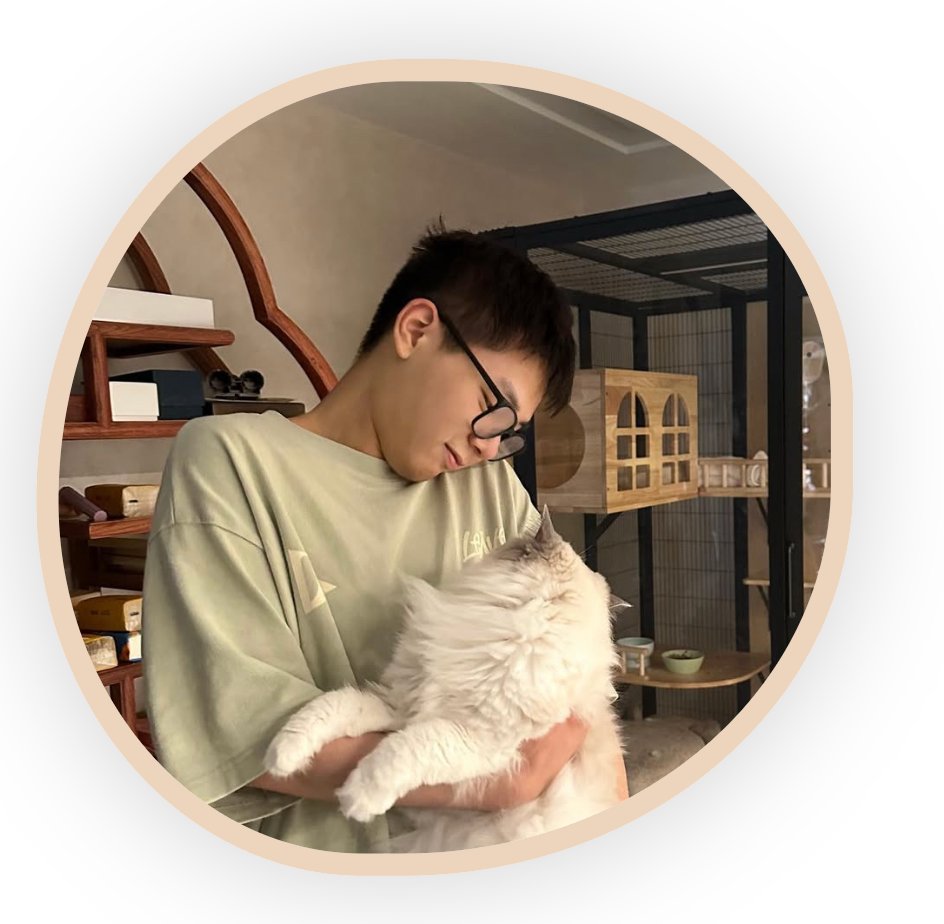
Photo of Qiaoning Carol Zhang

qiaoning@asu.edu

Santa Catalina Hall 150M

7271 E Sonoran Arroyo Mall

Mesa, AZ 85212

"Act as if what you do makes a difference. It does."
— William James

CARE Lab

CARE Lab Logo
CARE Lab
Collaborative Automation and Robotic Experiences Lab
Director: Dr. Qiaoning (Carol) Zhang

The CARE Lab at Arizona State University investigates how people interact with intelligent systems, from socially assistive robots and automated vehicles to AI-powered tools. Our mission is to design technology that is empathetic, trustworthy, and grounded in real human needs. We combine human-centered design methods, behavioral experiments, and applied data science to create systems that genuinely care about the people they serve.

Socially Assistive Robotics Trust in Automation Empathetic Design Human-AI Teaming Aging-in-Place

Interested in joining the lab? Learn about open positions.


Research

🤖

Socially Assistive Robots for Aging-in-Place

Designing empathetic robots (e.g., Furhat) that support older adults at home through compassionate communication, investigating stakeholder roles and transparency features that enhance trustworthiness.

Leading the design and evaluation of socially assistive robots with a focus on empathic communication to support aging-in-place. This work investigates how politeness strategies and role perceptions affect trust dynamics between older adults and healthcare robots, and how transparency features can enhance trustworthiness in human-robot interaction.

Key Publication: Zhang, Q., Zhou, F., Robert Jr, L. P., & Yang, X. J. (2024). Designing Healthcare Robots at Home for Older Adults: A Kano Model Perspective. HRI 2024.
Click to learn more ▾
🧠

Human-AI Teams and Complementary Expertise

Examining how humans and AI leverage complementary strengths for better joint decision-making, moving beyond automation toward genuine collaboration.

Conducted at Toyota Research Institute, this research analyzes the intricate behavioral dynamics and decision-making processes within human-AI collaborative teams. The work demonstrates how humans and AI can achieve outcomes that neither could accomplish alone by leveraging their unique, complementary expertise.

Key Publication: Zhang, Q., Lee, M.L. & Carter, S. (2022). You Complete Me: Human-AI Teams and Complementary Expertise. ACM CHI 2022. #1 in HCI by Google Scholar
Click to learn more ▾
🚗

Explanation and Trust in Automated Vehicles

Understanding how a vehicle's voice, explanation timing, modality, and content influence the dynamics of driver trust, workload, and acceptance across different age groups.

This research program examines how design features of automated vehicle explanations (timing, modality, voice gender, voice similarity), human user traits (age, suspicion level, personality), and driving contexts interact to build and sustain trust. Recent work explores how AI voice gender congruity and cognitive vs. affective explanation content shape trust differently.

Key Publications:
Zhang, Q., Yang, X. J., & Robert, L. P. (2025). AI Voice Gender, Gender Role Congruity, and Trust in AVs. Scientific Reports.
Zhang, Q., et al. (2023). Impact of Modality, Technology Suspicion, and NDRT on AV Explanations. IEEE Access.
Du, N., Haspiel, J., Zhang, Q., et al. (2019). Look Who's Talking Now. Transportation Research Part C.
Click to learn more ▾
📊

Expectation and Trust in Automated Vehicles

Studying how individual differences, personality, and prior expectations shape trust formation and long-term acceptance through large-scale representative surveys.

Using a large-scale survey with a representative U.S. sample, this research explores how expectations, personality traits, and individual differences shape initial trust formation and long-term acceptance of automated vehicles. This line of work provides a foundational understanding of what people want and expect from AVs before they even encounter one.

Key Publications:
Zhang, Q., Yang, X. J. & Robert, L. P. (2022). Individual Differences and Expectations of Automated Vehicles. IJHCI.
Zhang, Q., Yang, X. J. & Robert, L. P. (2020). Expectations and Trust in Automated Vehicles. CHI 2020 Extended Abstracts.
Click to learn more ▾
🏥

Healthcare Robot Feature Prioritization

Applying the Kano model to identify "must-be" and "attractive" design attributes for healthcare robots, optimizing user acceptance and functional utility for older adults.

This project applied the Kano model framework to systematically prioritize design features for healthcare robots intended for older adults. By categorizing features into "must-be," "one-dimensional," and "attractive" attributes, this work provides actionable guidance for designers to optimize both user acceptance and functional utility.

Key Publication: Zhang, Q., Zhou, F., Robert Jr, L. P., & Yang, X. J. (2024). Designing Healthcare Robots at Home for Older Adults: A Kano Model Perspective. HRI 2024.
Click to learn more ▾
⚕️

Enhancing Patient-Physician Relationships

Mapping patient and physician journeys (M-Well project) to design human-centered interventions that foster improved interactions and connectedness in healthcare.

The M-Well project at the University of Michigan mapped patient and physician journeys to identify pain points and design interventions that foster improved interactions and connectedness. This work applies human factors engineering principles to healthcare, including exploring how physicians can design their work environment for well-being, much like pilots design a cockpit.

Key Publication: Zamudio, J., Zhang, Q., et al. (2025). "Invert the Pyramid, Let Internists Design the Job as Pilots Do a Cockpit." Journal of Patient Safety.
Click to learn more ▾

Publications

2025
Journal Artificial Intelligence Voice Gender, Gender Role Congruity, and Trust in Automated Vehicles
Zhang, Q., Yang, X. J., & Robert, L. P., Jr.
Scientific Reports, 15(1), 1-12
#1 in Multidisciplinary Sciences by Google Scholar
Journal "Invert the Pyramid, Let Internists Design the Job as Pilots Do a Cockpit": Views of General Internal Medicine Physicians on Enhancing Well-Being Through Human Factors Engineering
Zamudio, J., Zhang, Q., Quinn, M., Fowler, K. E., Saint, S., & Yang, X. J.
Journal of Patient Safety, 21(7Supp), S36-S42
#3 in Health Policy and Medical Law by Google Scholar
Conference Understanding Explanation Content for Cognitive and Affective Trust in Automated Vehicles
Zhang, Q., Yang, X. J., & Robert, L. P., Jr.
Proceedings of the Human Factors and Ergonomics Society Annual Meeting (HFES 2025)
Conference Understanding User Needs in Automated Vehicle Explanations: A Qualitative Approach
Zhang, Q., Yang, X. J., & Robert, L. P., Jr.
Proceedings of the Human Factors and Ergonomics Society Annual Meeting (HFES 2025)
Conference Voice Similarity and its Impact on Cognitive and Affective Trust in Automated Vehicles
Zhang, Q., Yang, X. J., & Robert, L. P., Jr.
Proceedings of the Human Factors and Ergonomics Society Annual Meeting (HFES 2025)
Workshop Voice Design and Trust in Automated Vehicles: Findings and a Research Agenda
Chen, J., & Zhang, Q.
IEEE 7th International Conference on Trust, Privacy and Security (TPS-ISA 2025)
2024
Poster Designing Healthcare Robots at Home for Older Adults: A Kano Model Perspective
Zhang, Q., Zhou, F., Robert, L. P., Jr., & Yang, X. J.
ACM/IEEE International Conference on Human-Robot Interaction (HRI 2024)
2023
Journal The Impact of Modality, Technology Suspicion, and NDRT Engagement on the Effectiveness of AV Explanations
Zhang, Q., Esterwood, C., Pradhan, A. K., Tilbury, D., Yang, X. J., & Robert, L. P.
IEEE Access, 2023
#1 in Engineering & Computer Science by Google Scholar
Short Paper Finding the Right Voice: Exploring the Impact of Gender Similarity and Gender-Role Congruity on the Efficacy of Automated Vehicle Explanations
Zhang, Q., Yang, X. J., & Robert, L. P., Jr.
AAAI Symposium Series, 2023
Book Chapter Human-Robot Interaction
Esterwood, C., Zhang, Q., Yang, X. J., & Robert, L. P.
In C. Stephanidis & G. Salvendy (Eds.), Human-Computer Interaction Handbook, CRC Press
2022
Conference You Complete Me: Human-AI Teams and Complementary Expertise
Zhang, Q., Lee, M. L., & Carter, S.
ACM CHI Conference on Human Factors in Computing Systems (CHI 2022)
#1 in Human Computer Interaction by Google Scholar
Journal Individual Differences and Expectations of Automated Vehicles
Zhang, Q., Yang, X. J., & Robert, L. P., Jr.
International Journal of Human-Computer Interaction, 38(9), 825-836
#8 in Human Computer Interaction by Google Scholar
2021
Journal What and When to Explain? A Survey of the Impact of Explanation on Attitudes toward Adopting Automated Vehicles
Zhang, Q., Yang, X. J., & Robert, L. P.
IEEE Access, 9, 159533-159540
#1 in Engineering & Computer Science by Google Scholar
Journal Drivers' Age and Automated Vehicle Explanations
Zhang, Q., Yang, X. J., & Robert, L. P., Jr.
Sustainability, 13(4), 1948
2020
Poster Expectations and Trust in Automated Vehicles
Zhang, Q., Yang, X. J., & Robert, L. P.
CHI Extended Abstracts, 2020
Journal A Review of Personality in Human-Robot Interactions
Robert, L. P., Jr., Alahmad, R., Kim, S., Esterwood, C., You, S., Zhang, Q., et al.
Foundations & Trends in Information Systems, 4(2), 107-210
2019
Journal Look Who's Talking Now: Implications of AV's Explanations on Driver's Trust, AV Preference, Anxiety and Mental Workload
Du, N., Haspiel, J., Zhang, Q., Tilbury, D., Pradhan, A. K., Yang, X. J., & Robert, L. P., Jr.
Transportation Research Part C: Emerging Technologies, 104, 428-442
#2 in Transportation by Google Scholar
2018
Conference Evaluating Effects of Automation Reliability and Reliability Information on Trust, Dependence and Dual-Task Performance
Du, N., Zhang, Q., & Yang, X. J.
Human Factors and Ergonomics Society Annual Meeting, 2018

Teaching

Instructor, Arizona State University

Spring 2026HSE 521 Methods & Tools in Human Systems Engineering
Spring 2026HSE 584 Internship
Spring 2026HSE 792 Research
Fall 2025HSE 521 Methods & Tools in Human Systems Engineering
Fall 2025HSE 792 Research
Spring 2025HSE 477 Human Systems Engineering Capstone
Spring 2025HSE 493 Honors Thesis
Fall 2024HSE 521 Methods & Tools in Human Systems Engineering

Graduate Student Instructor, University of Michigan

Fall 2021-22SI 582 Introduction to Interaction Design
Winter 2021SI 618 Data Manipulation and Analysis (4.83/5)
Winter 2020SI 622 Needs Assessment and Usability Evaluation (4.82/5)
Fall 2019SI 501 Contextual Inquiry and Consulting Foundations (4.83/5)

Invited Talks & Presentations

Bridging Humans and Technology: Human-Centered Design for Trust and Collaborative Futures
2024 · Arizona State University · UM Transportation Research Institute · University of Houston
You Complete Me: Human-AI Teams and Complementary Expertise
2021-22 · Toyota Research Institute · ACM CHI 2022
Finding the Right Voice: Gender Similarity and AV Explanations
2023 · AAAI AI for HRI Symposium
From the Head or the Heart? Explanation and Trust in AVs
2021-22 · HCI Consortium · AAAI AI for HRI Symposium
An AV like Me? Personality Similarities and Differences between Humans and AVs
2019 · AAAI AI for HRI Symposium

Professional Service

Leadership & Committees

  • Associate Chair, CHI 2026 (Interacting with Devices)
  • Program Committee, IEEE Trustworthy Human-AI Workshop 2025
  • Associate Chair, AutomotiveUI 2024

Review Panels

  • NSF IIS Panel (2025)
  • NSF OISE Panel (2024)

Journal Reviewing

  • Transportation Research Part C & Part F
  • Intl. Journal of Human-Computer Interaction
  • Intl. Journal of Social Robotics
  • ACM Trans. on Human-Robot Interaction
  • IEEE Trans. Human-Machine Systems
  • Computers in Human Behavior
  • Scientific Reports (Nature)
  • Applied Ergonomics
  • Journal of Medical Systems
  • JAIS · AIS Trans. HCI

Conference Reviewing

  • CHI (2021, 2023, 2025, 2026)
  • HRI (2019, 2025)
  • HFES / ASPIRE (2025, 2026)
  • ICRA (2025)
  • CSCW (2024)
  • AutomotiveUI (2019, 2021, 2023)
  • ICIS (2019, 2021) · ECIS (2022)

Selected Press

Toyota Research Institute (2022)
Michigan Radio / NPR (2019)
CNET (2019)
World Economic Forum (2019)
Futurity (2019)
DBusiness (2019)
Tech Century (2019)
Pioneering Minds (2019)

Join My Research Team

I am actively seeking highly motivated students with strong backgrounds and passions for Human-Computer Interaction, particularly in transportation technology, healthcare robotics, AI, UX research and design, and data analytics.

Get in Touch →

Prospective Ph.D. Students

Apply to the ASU HSE Ph.D. program and select my name. Email me with subject "Prospective PhD Student" including your CV, research interests, publications or writing samples, and references.

Undergraduate & Master's Students

Email me with subject "Prospective Undergraduate/Master's Student" including your CV, transcripts, and a brief description of your background and interests.